
A child’s early years are filled with rapid growth, and physical milestones often take center stage. Parents eagerly anticipate the first steps and the first words. Yet, the development of social skills is equally critical to a child’s future well-being and success. Learning how to interact with others lays the groundwork for meaningful relationships, effective communication, and emotional resilience.
Understanding the Stages of Social-Emotional Growth
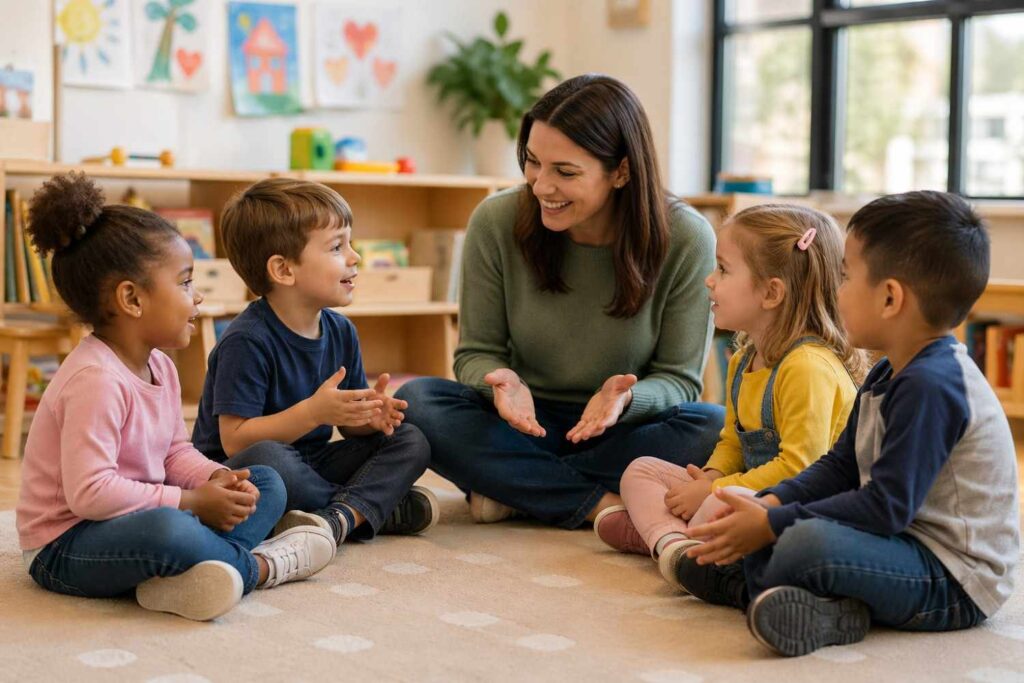
Children move through distinct phases of social development as they grow. Recognizing these stages helps adults set realistic expectations and provide age-appropriate support.
In the first year of life, social development is primarily about attachment and trust. Infants learn to recognize familiar faces, respond to smiles, and engage in basic back-and-forth communication through babbling and eye contact. They rely entirely on caregivers to regulate their emotions and meet their needs.
As children become toddlers, their social world expands, though it remains highly self-centric. You will often observe “parallel play” during this stage. Two toddlers might sit side-by-side playing with blocks, completely engrossed in their own activities without actually interacting with one another. This is a normal and necessary step toward more complex social engagement. They are beginning to assert their independence, which frequently leads to conflicts over toys as they grasp the concept of ownership.
By the preschool years, children transition into “cooperative play.” They start to actively engage with their peers, assign roles in games, and work together toward a common goal. This is the stage where true friendships begin to form. Preschoolers are increasingly capable of understanding that other people have feelings and perspectives different from their own, marking the early stages of cognitive empathy.
Practical Strategies to Foster Social Skills
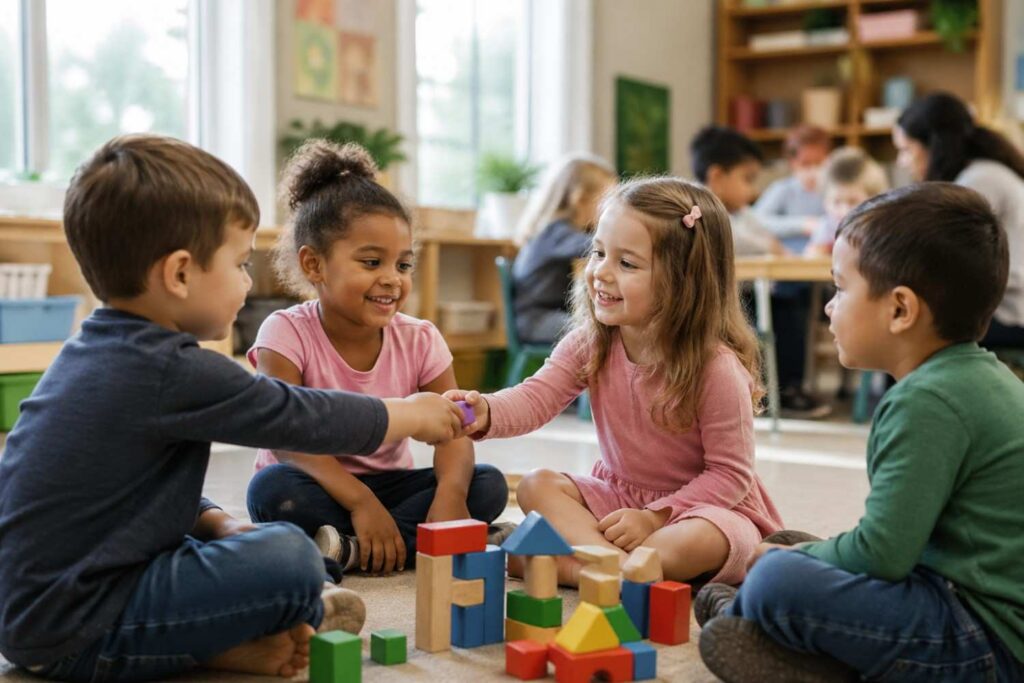
Building a strong social foundation requires consistent guidance. Here are several effective ways parents and educators can help young children navigate their social worlds.
Role-playing and imaginative play
Pretend play is a powerful vehicle for social learning. When children dress up as doctors, teachers, or chefs, they are experimenting with different social roles and rules. They practice the language associated with these roles and learn how to negotiate the terms of their play with others.
Adults can facilitate this by providing open-ended props like cardboard boxes, costumes, and play kitchens. You can also join in the play to model appropriate social interactions. If you are playing a restaurant game, model how to politely order food and say thank you to the “waiter.” This gives children a safe space to practice social scripts they will use in the real world.
Encouraging sharing and cooperation
Sharing is notoriously difficult for young children, largely because they do not yet have a firm grasp of time. To a toddler, giving a toy to someone else feels like giving it away forever. Instead of forcing children to share immediately, teach the concept of taking turns, which is also called early learning.
Use visual timers to help them understand that they will get the item back. Praise cooperative behavior specifically. Rather than saying a generic “good job,” you might say, “I loved how you gave the red block to your sister when she asked for it.” Games that require teamwork, such as building a single large tower together or keeping a balloon in the air, also naturally encourage cooperative behavior.
Teaching empathy and emotional regulation
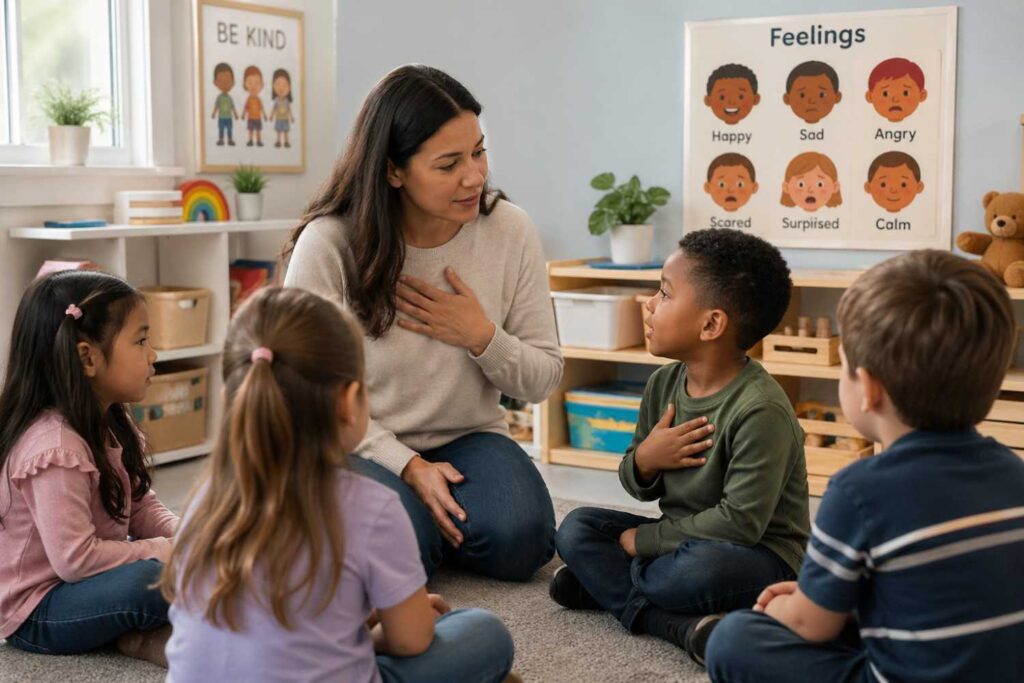
Before children can understand the feelings of others, they must be able to identify their own. Help children build an emotional vocabulary by labeling their feelings. If a child is crying because a tower fell, you can say, “You feel frustrated because your blocks fell.”
Once they can identify their own emotions, point out the emotions of others. Reading books is an excellent way to practice this. Pause while reading and ask, “How do you think that character feels right now? Look at their face.” Teach calming techniques for when big emotions hit, such as taking deep breaths or squeezing a soft toy. A regulated child is much better equipped to interact positively with peers.
Facilitating positive peer interactions
Children need regular opportunities to practice their skills with other children. Arrange playdates, visit local parks, or enroll them in group activities. Before a playdate, set clear expectations and review basic social rules.
When conflicts inevitably arise, resist the urge to immediately solve the problem for them. Instead, act as a mediator. Ask each child what happened, validate their feelings, and guide them toward finding a compromise. Over time, this coaching empowers them to resolve disputes independently.
Addressing Challenges and Promoting Inclusion
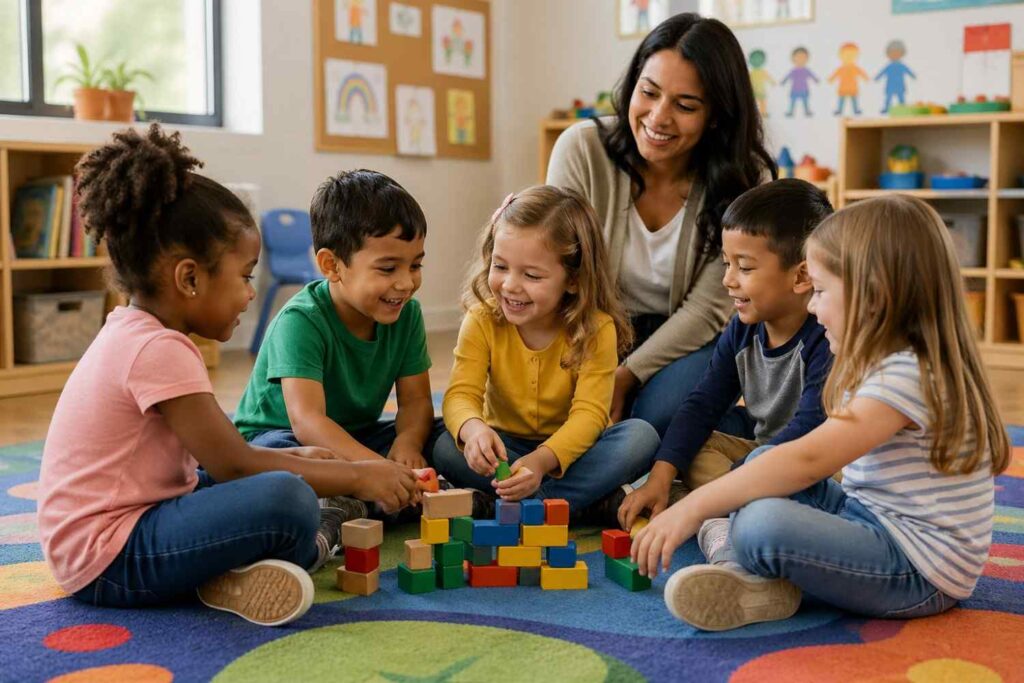
Every child develops at their own pace, and some may face unique challenges in social settings. A child might be naturally introverted, requiring more time to warm up to new groups. Others might struggle with sensory overload or neurodevelopmental differences that make reading social cues difficult.
Creating an inclusive environment means celebrating these differences while providing targeted support. Teach children that everyone plays and communicates differently. Encourage them to invite quieter peers into their games and to be patient if someone does not respond immediately.
Finding the right environment, like a preschool in West Jordan, can provide the structured peer interactions children need to thrive. Quality early childhood programs prioritize inclusive practices, ensuring that children of all temperaments and abilities feel valued. Educators in these settings are trained to spot social hurdles early and implement strategies that help every child feel a sense of belonging.
Conclusion
Helping a child develop strong social skills is a long-term investment in their happiness and success. The ability to cooperate, show empathy, and communicate effectively will serve them far beyond the playground. These foundational abilities influence their academic performance, their career trajectories, and their mental health as adults.