
After spending years traveling across the country in an RV, I learned that campground choice shapes far more than just where you sleep for the night. Early in my travels, I often pulled into campgrounds late expecting quiet rest, only to find activities still running and families gathered outside. That disconnect between expectation and reality forced me to rethink how campgrounds are designed. It pushed me to clearly understand What are the Three Levels of KOA before planning future trips.
As my experience grew, I stopped choosing campgrounds based only on distance or availability. I began matching each stop to my energy level, travel pace, and how long I planned to stay in one place. Some days required efficiency and minimal interaction, while others demanded comfort, space, and social energy. That mindset shift made long-term RV travel sustainable instead of exhausting.
💡 Key Takeaways for Your Next Trip
- Journey: Designed for quick, convenient overnight stops with easy highway access.
- Holiday: A basecamp option built for two to three day stays near attractions.
- Resort: A destination experience where amenities and activities are central.
- Uniform Standards: All KOA locations maintain clean facilities, laundry access, and pet-friendly areas.

Understanding KOA and How It Works
The meaning behind the yellow sign
When I first started traveling, I often wondered What Does KOA Stand For? as I passed the familiar yellow signs along interstates and state highways. KOA stands for Kampgrounds of America, a nationwide network created to bring consistency to camping. The goal was to reduce uncertainty for travelers regardless of location. That foundation still defines the brand today.
What KOA represents in practice
Many new travelers ask what is KOA and assume it refers to a single campground style. In reality, KOA operates as a structured system designed around travel behavior and length of stay. Each tier signals how the campground is meant to be used. This structure helps travelers avoid mismatched expectations.
Predictability in an unpredictable lifestyle
People also ask what does KOA mean beyond the name itself. For me, it represents predictability in a lifestyle that is otherwise full of unknowns. Arrival flow, amenities, and general atmosphere follow a pattern. That clarity reduces stress on travel days.
What makes a KOA campground different
When explaining what is a KOA campground, I focus on function rather than visuals. KOA campgrounds are designed with specific use cases in mind. Some support movement, while others support exploration or rest. That intentional design is what makes the system effective.
What KOA camping looks like day to day
Travelers unfamiliar with the brand often ask what is KOA camping compared to public campgrounds. KOA camping emphasizes consistency, services, and reliable standards. While amenities vary by tier, cleanliness and safety remain consistent. This makes it easier for new RVers to adapt quickly.
Campgrounds versus rigs
Living on the road changes how you think about comfort and priorities. I have met many travelers searching for the best RV for full-time living, only to realize that the campground environment matters just as much as the rig itself. Even a luxury RV can feel stressful in the wrong setting. The right campground can make a modest setup feel functional and calm.
The KOA Journey: The Road Warrior’s Best Friend
Why KOA Journey exists
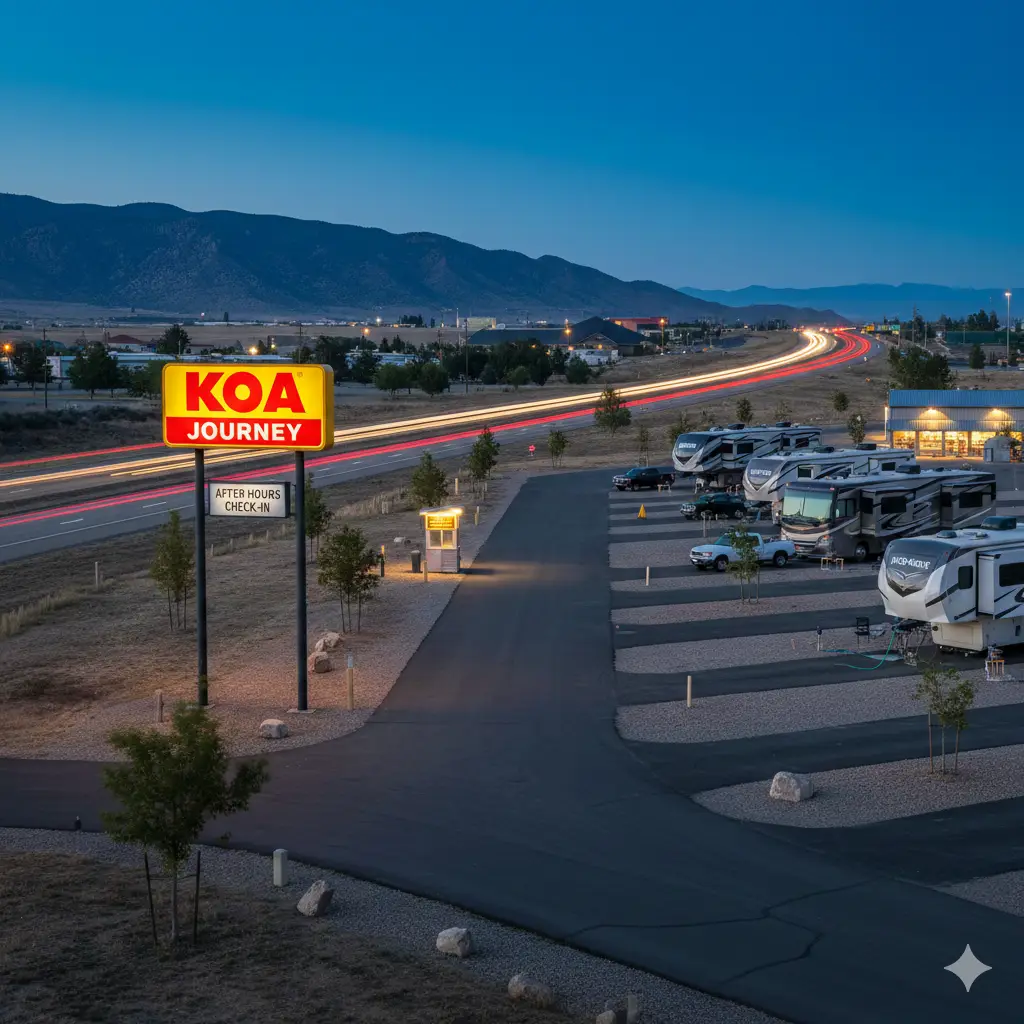
KOA Journey locations are built for travelers who prioritize efficiency and distance. When I am driving long hours and planning to leave early the next morning, this is the level I choose. These parks are usually located close to highways. Everything about them supports short stays.
What the Journey experience feels like
Journey parks emphasize function over entertainment. Long pull-through sites allow RVs to remain hitched, saving time and effort. Check-in processes are streamlined to support late arrivals. The atmosphere stays transitional and quiet.
Journey versus other KOA levels
Many travelers compare KOA Journey vs Holiday when planning routes. Journey works best for overnight stops, while Holiday supports longer stays. The difference becomes obvious after one visit. Arrival and departure are much simpler at Journey parks.
Understanding Journey labeling
Some people ask what does KOA campground stand for when reading listings online. The label reflects purpose, not quality. Journey means travel-focused, not lower standard. Service and cleanliness remain consistent.
Reality on the road
This level reflects the honest truth about living in an RV. Not every night is about campfires or socializing. Some nights are about sleep, safety, and preparing for the next stretch of highway. Journey parks are built for those nights.
The KOA Holiday: Your Adventure Headquarters
Why Holiday works as a basecamp
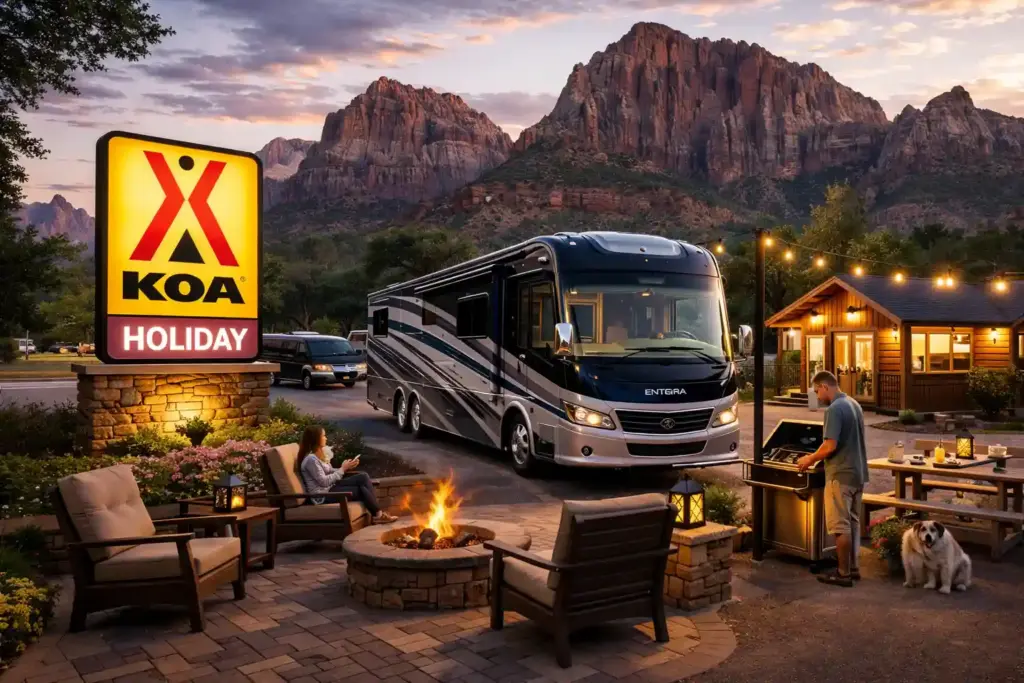
KOA Holiday locations are ideal when travel slows down and exploration begins. I usually choose this level when I plan to stay in an area for several days. These parks are often near national parks, beaches, or tourist towns. They provide a comfortable home base.
Holiday versus Journey in practice
Searches for KOA Holiday vs Journey are common among planners. Holiday parks offer more space and amenities. Journey parks focus on speed and simplicity. Choosing depends on how long you plan to stay.
Comfort without overload
Holiday parks provide patios, green spaces, and recreation areas. These details quietly support travelers who often ask how can technology enhance your camping experience, without forcing a packed activity schedule. You can relax without feeling pressured to participate. This balance appeals to many travelers.
Why Holiday is the most flexible tier
Understanding the KOA levels helps travelers plan accurately. Holiday sits between movement and rest. That balance makes it one of the most popular choices for extended trips.
How KOA organizes its campgrounds
The brand uses clear labels to define KOA types. These types reflect how each campground should be used. They are not marketing buzzwords. This structure reduces disappointment and poor reviews.
The KOA Resort: When the Campground is the Goal
Resort parks as destinations
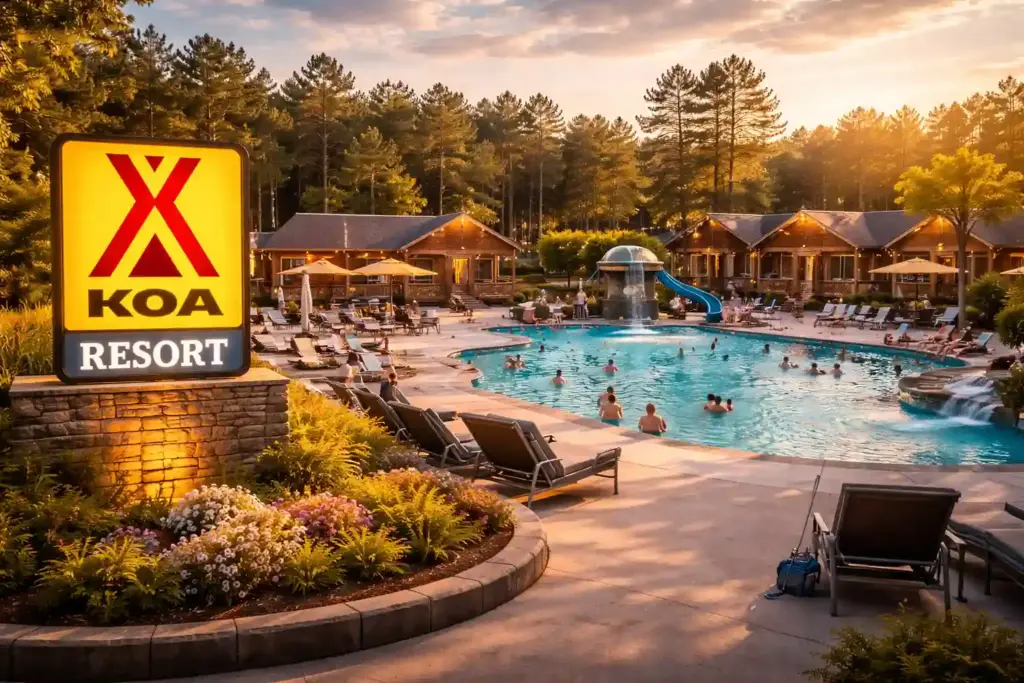
KOA Resort locations represent the top tier of the system. When people compare KOA Journey vs Holiday vs Resort, the difference is immediate. Resort parks are destinations, not stopovers. Trips are planned around them.
What defines the Resort atmosphere
Resort parks include pools, dining, events, and structured activities. The environment feels more like what you would expect at KOA resort campgrounds than traditional camping. Guests often stay on site for most of the day. Social interaction becomes part of the stay.
Resort versus Holiday differences
The difference between KOA Holiday and Journey is smaller than the jump to Resort. Resort parks are designed for extended stays. The pace is slower and more social. This suits travelers seeking rest and connection.
Variation across KOA locations
People notice the difference in KOA campgrounds and sometimes assume inconsistency. In reality, variation is intentional. It allows one brand to serve multiple travel styles. That flexibility is a major strength.
Choosing the Right KOA Level Based on Travel Pace
One of the biggest lessons I learned after months on the road is that travel pace matters more than distance. Some days I enjoy covering hundreds of miles, while other days I prefer staying put and exploring slowly. The KOA tier you choose should reflect that rhythm. When the campground matches your pace, travel feels intentional instead of rushed.
Fast-paced travel days pair best with KOA Journey locations. These parks are easy to navigate, even in the dark, and reduce the mental load of arrival. Slower travel days naturally align with KOA Holiday or Resort parks. These levels allow you to settle in and enjoy your surroundings.
How Seasonal Travel Impacts KOA Choice
Seasonality plays a larger role in campground selection than many first-time RVers expect. During peak summer months, Resort parks often fill quickly due to family vacations. Journey parks, however, tend to maintain availability because they serve overnight travelers.
In shoulder seasons like spring and fall, Holiday parks become ideal. Attractions are less crowded, and campground amenities are easier to access. I often plan longer stays during these periods because the balance between comfort and cost improves.
Budget Planning Across KOA Levels
Budget strongly influences how often each KOA tier fits into a trip. Journey parks are usually the most affordable option for consistent overnight stops. Holiday parks cost more but deliver better value for multi-day stays. Resort parks are the most expensive, but they often replace separate entertainment expenses.
I treat Resort stays as planned splurges rather than routine stops. By mixing tiers throughout a trip, I keep overall travel costs manageable. This approach allows premium experiences without burning through a travel budget too quickly.
Traveling Solo vs Traveling With Others
Travel style also affects which KOA level feels right. When traveling solo, I lean toward Journey and Holiday parks. These levels provide enough interaction without feeling overwhelming.
When traveling with family or friends, Resort parks make more sense. Shared activities, pools, and common spaces encourage connection. The campground itself becomes part of the vacation rather than just a place to sleep.
Long-Term RV Living and KOA Rotation
For long-term RV travel, rotating between KOA levels is essential. Staying too long in one type of campground can lead to burnout. Journey parks keep travel moving, while Holiday parks offer recovery time.
I often plan trips with intentional transitions between tiers. A few nights at a Journey followed by several nights at a Holiday creates balance. Adding a Resort stay every few weeks helps recharge mentally and physically.
🎥 KOA Campgrounds EXPLAINED!
This RV Miles video breaks down the Kampgrounds of America system and explains the differences between Journey, Holiday, and Resort locations, aligning with your key takeaways. The host covers brand history, standard amenities like Kamp K9 and laundry, and how each tier fits different travel needs, from quick highway stops to full vacation stays. It serves as a clear visual guide for RVers who want to reduce decision fatigue before booking.
How KOA Helps Reduce Decision Fatigue on the Road
One challenge I did not expect when I first started traveling full time was decision fatigue. Every day on the road comes with dozens of small choices, from routing and fuel stops to where you will sleep at night. When campground options feel unclear, those decisions become heavier than they should be. The KOA tier system quietly solves that problem by narrowing choices before you even open the map. Instead of comparing dozens of campgrounds on amenities alone, I can immediately filter by intent. That mental shortcut matters more than most people realize.
Over time, this structure has helped me conserve energy for things that actually improve travel quality. I spend less time second-guessing bookings and more time enjoying the journey itself. Knowing what kind of experience a campground is designed to deliver removes uncertainty. It allows me to book confidently, even on days when plans change quickly. For long trips, that reduction in mental load becomes just as valuable as physical comfort. It is one of the understated reasons why the KOA system works so well for extended travel.
Comparing the Tiers at a Glance
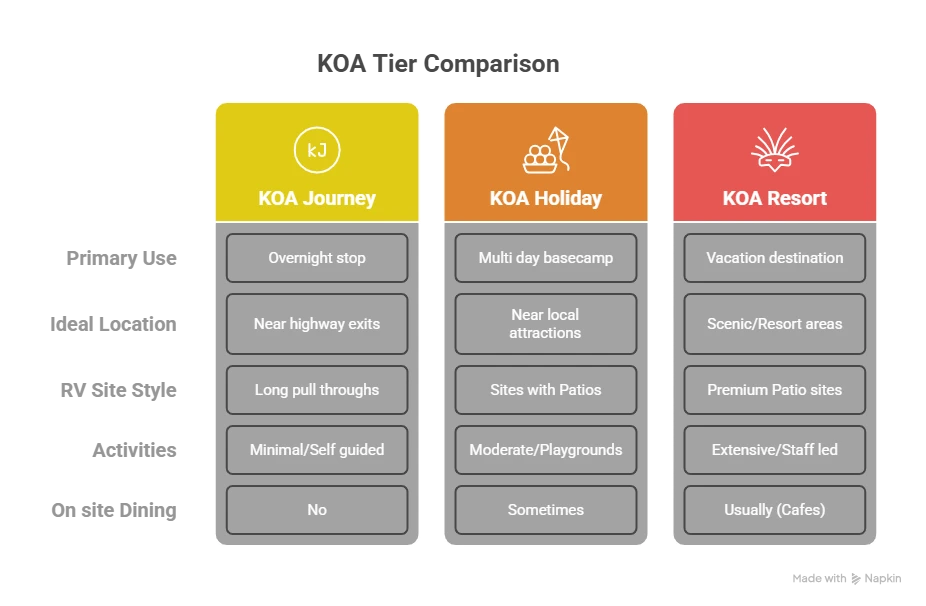
To help visualize the differences I have experienced on the road, the table below highlights how each KOA level serves a specific purpose and explains What are the Three Levels of KOA in practical terms.
Final Pro Tips for Your Booking
After years of navigating what are the different levels of koa, I have developed a few strategies:
- Check the Map: Even if it is a Journey, check the map to see how far it is from the highway. Some are more shielded from road noise than others.
- The Patio Factor: If you are staying at a Holiday or Resort, the KOA Patio site is worth every penny. Having a clean, level surface for your chairs and table makes a huge difference in your comfort.
- Rewards Points: Use your rewards points for free nights at Resorts. Since Resorts are the most expensive, you get the highest dollar per point value by redeeming them there.
Clarifying the Differences One More Time
If you are still stuck on the difference in koa campgrounds, just look at the logo on the website.
- The Yellow Rectangle: Journey (Travel focused).
- The Green Rectangle: Holiday (Basecamp focused).
- The Blue and Red Rectangle: Resort (Destination focused).
FAQs
1. What are the different levels of KOA?
Yes, KOA operates three levels called Journey, Holiday, and Resort.
2. Which KOA is better, holiday or journey?
No, the better option depends on whether you are stopping overnight or staying multiple days.
3. Are KOA campgrounds consistent?
Yes, cleanliness and service standards remain consistent across all KOA locations.
4. Can KOA support long-term RV travel?
Yes, many travelers rotate between levels to support extended trips.
5. How do I know which KOA level I am booking?
Yes, each KOA location clearly displays its level on the official website and mobile app.
Final Thoughts From the Road
After years of RV travel, I no longer book campgrounds randomly. I choose them based on intent, energy level, and how long I want to stay, which is exactly why understanding What are the Three Levels of KOA has become part of my planning process. Some days require movement, while others require space and comfort.
Understanding how KOA structures its campground system removes guesswork. When each stop serves a clear purpose, travel becomes smoother, more affordable, and far more enjoyable over the long haul.