
Alright, confession time: when I first started RVing full-time, I never thought I’d be stressing over sewer hose storage. I mean, how much of an issue could that really be, right?
But after a few trips, I quickly realized that dealing with a nasty, smelly hose every time you need to store it is no joke.
Fast forward 15 years of RV life, and let me tell you—if you don’t have your sewer hose situation figured out, it can make your whole trip feel like a total mess.
Enter RV sewer hose storage. Now, I’m here to share some tried-and-true methods that’ll keep your hose neat, sanitary, and most importantly, out of sight—because, seriously, no one wants to see that thing hanging around.
Types of RV Sewer Hose Storage Solutions
When it comes to storing your RV sewer hose, there are several types of storage solutions available. The best option depends on your RV’s layout, how often you use the hose, and your personal preference.
1. Extendable Storage Tubes
Extendable storage tubes are one of the most common ways to store your RV sewer hose. They are long, flexible tubes that can be mounted under your RV.
The beauty of these systems is that they can extend to accommodate longer hoses, and retract when not in use. They are easy to access and ensure that your sewer hose remains clean and protected from the elements.
2. RV Sewer Hose Carriers
An RV sewer hose carrier is a more rigid storage solution, often cylindrical in shape. These carriers are typically mounted underneath the RV and are perfect for securely storing your hose.Some even come with a hose reel feature for easy extension and retraction.
3. Hose Holders with RV Lanes
For convenience, some RV-friendly gas stations or campgrounds offer gas stations with RV lanes where you can park your RV while securing your sewer hose holder. These are perfect for when you’re on the go and need quick access to your RV sewer hose storage.
What’s the Best Way to Store My RV Sewer Hose?
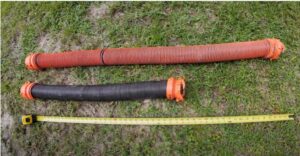
Image source- Downsizing Makes Cents
When it comes to RV sewer hose storage, there’s more than one way to handle it.
Whether you’re a seasoned traveler or just getting started, it’s all about finding a solution that works for your RV, your lifestyle, and your comfort level with keeping things clean.
Let me walk you through the options.
How Can I Store My Sewer Hose Under My RV?
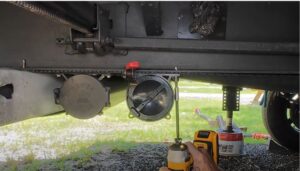
Image source- Downsizing Makes Cents
Under-RV storage is my personal favorite for keeping things out of sight and safe. I’ve used this method for years, and it’s honestly the most convenient and efficient solution for full-time RVers.
You can install a PVC or aluminum tube under your RV chassis, and just roll up that sewer hose and slide it right in.
I recommend the RecPro RV extendable waste hose carrier or the Valterra A04-0155XBK (if you like the sound of a durable black 94″ tube).
Both do the job beautifully, holding up to even the heaviest hoses without batting an eye.
- Pro Tip: Make sure to measure the length and diameter of your hose before choosing a tube. You don’t want to end up with a tube that’s too small to fit your hose and all its fittings.
How Does Bumper-Mounted Storage Work for Sewer Hoses?
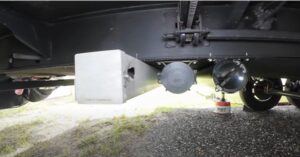
Image source- Downsizing Makes Cents
This is by far the most common storage method for most RVs, and it’s incredibly easy to set up. Basically, you’re using the empty space inside your rear bumper to store your sewer hose.
You’ll need a bumper-mounted hose carrier, which is easy to find at most RV supply stores.
- Benefits: Keeps your sewer hose hidden and protected, so it won’t be exposed to the elements. Plus, it’s simple to install without too much hassle.
- Considerations: Be sure to check that your RV’s bumper can handle the weight and size of your carrier. Some bumpers may need to be reinforced to handle the load, so don’t just assume yours is ready for the job.
If you’re in the market, look for a bigger bumper that’s compatible with a secure hose carrier. You don’t want to be dealing with any leaks while you’re in the middle of nowhere, do you?
What’s the Deal with DIY PVC or Fence Post Storage?
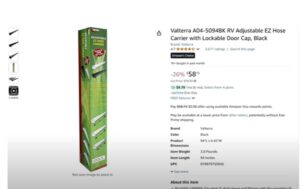
Image source- Downsizing Makes Cents
Okay, I know this one sounds a little DIY-hack-crazy, but hear me out—this option is both budget-friendly and customizable.
If you’re someone who loves a good project (or if you’re just looking for a quick, low-cost solution), repurposing PVC pipe or a fence post for storage is an excellent option.
I’ve done this a few times for myself and friends, and I’ve gotta say—when done right, it works like a charm.
You just cut the pipe to the length you need, attach end caps, and secure it under your RV. You can even paint it to match your RV’s colors if you’re feeling fancy.
- Pro Tip: Use the right size pipe to accommodate your hose and its fittings, or you’ll end up with a cramped, difficult-to-use storage solution.
This method is great because it allows you to create a storage solution tailored to your RV’s exact dimensions, plus it won’t break the bank.
Can a Portable Storage Bag Help with Sewer Hose Storage?
Portable storage bags may seem a little less glamorous, but they have their place, especially for those of us who prefer to travel light and keep things extremely organized.
These bags are typically made from durable materials and come with multiple compartments to keep your sewer hose and all the necessary accessories (such as fittings, gloves, etc.) in one place.
They’re also versatile—take the bag with you when you’re out and about for easy, on-the-go storage.
- Considerations: If you’re using a particularly heavy-duty hose, a portable bag may not be the best option.
Additionally, depending on the bag’s material, you may encounter issues with odor or contamination if you don’t clean and dry your hose thoroughly before packing it away.
How Do I Keep My Sewer Hose Clean While Storing It?
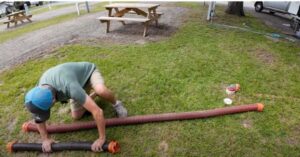
Image source- Downsizing Makes Cents
A clean hose is a happy hose. And I don’t mean just for hygienic reasons, but for the sake of keeping your RV storage space odor-free.
Trust me—if you don’t take care of your sewer hose, you’ll pay the price every time you open up your storage compartment.
- Clean & Dry: Always make sure your hose is thoroughly cleaned and dried before you store it. You don’t want it festering with bacteria or odors.
- Use Ventilation: Whether you’re using a tube, a bag, or a carrier, make sure your hose gets enough airflow to prevent mold and mildew. Air dry it in the sun if you can, or at least dry it as best as possible.
Benefits of Proper RV Sewer Hose Storage
1. Maintains Hygiene
By storing your RV sewer hose properly, you prevent dirt, debris, and bacteria from contaminating your vehicle’s storage compartments. Keeping your hose clean also helps prevent unpleasant odors.
2. Reduces Wear and Tear
A sewer hose holder for RVs or storage tube prevents damage to your hose, such as cracking or abrasions that could lead to leaks. A secure storage solution keeps the hose safe when not in use and extends its lifespan.
3. Saves Space
Proper storage ensures that the hose does not take up valuable space inside your RV. It also makes it easier to find and access when you need it, especially for long-term travelers or full-time RVers.
Step-by-Step Guide: How to Store Your RV Sewer Hose
Step 1: Clean the Sewer Hose
Before storing your RV sewer hose, ensure it is thoroughly cleaned and dried. Use a hose cleaner or a specialized cleaning solution to remove any waste residue inside. After cleaning, hang the hose to dry completely to prevent any odor or mold buildup.
Step 2: Coil the Hose
After cleaning, coil the hose neatly. This helps reduce the risk of tangling or kinks. A hose holder or storage tube can be used to keep it in place while stored.
Step 3: Choose a Storage Solution
Depending on your RV model, choose either an extendable storage tube or a sewer hose carrier that fits your hose size. Ensure that the sewer hose storage for RV solution you choose is easily accessible and secure.
Step 4: Store the Hose Properly
Store the hose in the designated compartment or under the RV, depending on the storage system you have. Make sure the hose is placed in a position where it’s easy to retrieve when needed and won’t be damaged by the vehicle’s movement.
How to Maintain Your RV Sewer Hose Storage System
Proper maintenance of your sewer hose storage ensures it remains functional and efficient over time. Here are a few tips for maintaining your system:
-
Check for Leaks: Regularly inspect your RV sewer hose storage tube or hose carrier for cracks or leaks. Repair any damages immediately to avoid contamination or unpleasant odors.
-
Clean the Storage Tube: Just like your hose, the storage system needs cleaning. Periodically, remove the hose and clean the tube or holder to ensure no debris or mold buildup occurs.
-
Use Sealants for Secure Fit: If your hose carrier doesn’t feel secure, use appropriate sealants or extra fasteners to ensure it stays tightly attached.
Where to Buy RV Sewer Hose Storage Solutions
If you’re looking for the best RV sewer hose storage tube, hose holder, or carrier, consider these options:
-
Walmart offers various affordable storage solutions for RVs.
-
RecPro provides extendable waste hose carriers and hose storage systems that are known for their durability.
-
The Fit RV recommends the Super Tube, which is one of the most popular options for RV sewer hose storage.
FAQs:
How Does an RV Sewer Hose Carrier Help with Organization?
An RV sewer hose carrier helps keep your sewer hose neatly stored and organized, preventing it from tangling or getting dirty. By having a designated space for the hose, it makes it easy to access when needed, ensures it stays clean, and frees up space in your RV’s storage areas.
How Does an RV Sewer Hose Storage Tube Work?
An RV sewer hose storage tube is a cylindrical container that is mounted under the RV to store the sewer hose when not in use. It helps keep the hose protected from dirt, debris, and damage, while ensuring it remains clean and easily accessible. The tube typically has a cap or opening at either end for easy retrieval of the hose.
What Are the Best Camper Sewer Hose Storage Options?
Some of the best options for camper sewer hose storage include:
-
Extendable storage tubes: Flexible and retractable, these tubes can adjust to fit longer hoses.
-
Rigid sewer hose carriers: Secure and often mounted under the RV for easy access.
-
Hose reels: Automatically retract the hose when it’s not in use, keeping it neat and tangle-free.
-
Hose holders: Mounted on the side of the RV, they provide a simple and compact solution.
What Is the Best Sewer Hose Storage for RVs?
The best sewer hose storage for RVs depends on your needs:
-
For ease of access and flexibility, extendable storage tubes are a great option.
-
For durability and long-term storage, rigid hose carriers work well.
-
If you prefer an automatic solution, hose reels can simplify hose management and storage.
What Is the Purpose of a Sewer Hose Holder for an RV?
The purpose of a sewer hose holder for an RV is to securely store the sewer hose when it’s not in use, preventing it from getting dirty or tangled. It ensures that the hose remains clean and accessible while freeing up space inside the RV, making it easier to store and use when needed.
Final Scoop Before You Jump In
When it comes to RV sewer hose storage, there are numerous options, and the key is determining which one works best for you.
Whether you prefer a classic bumper-mounted solution or you’re feeling DIY-savvy with a PVC pipe, the goal is to keep your hose secure, clean, and out of sight. No one wants to deal with a messy, smelly hose during a road trip, so make sure you’ve got the right system in place before you hit the road.