
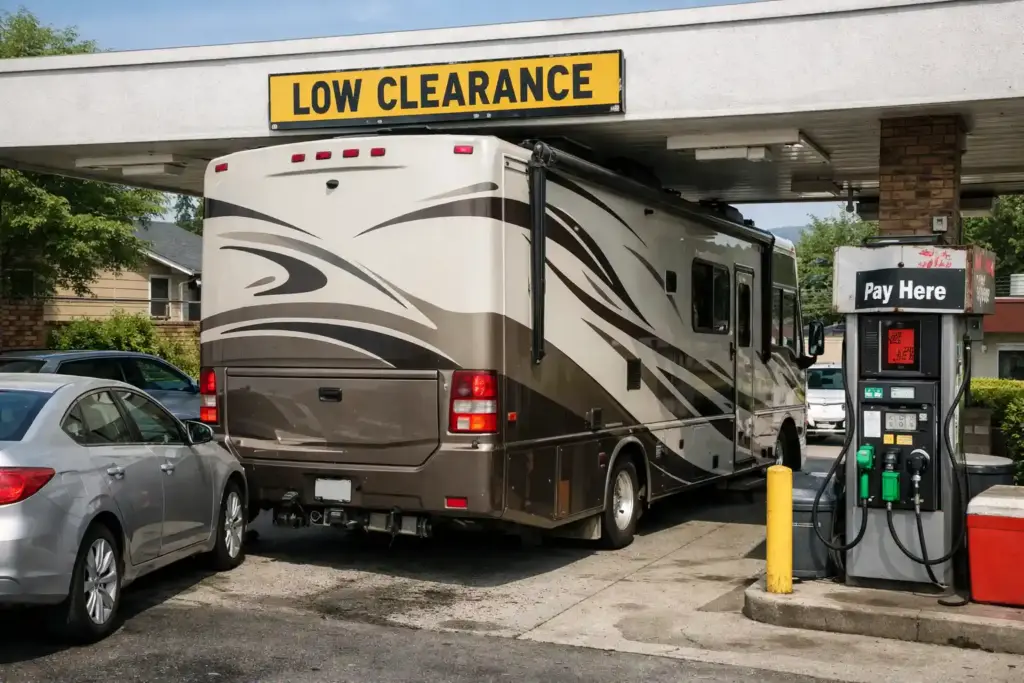
How to find RV friendly gas stations on the road is a common question for every new traveler who has ever stared down a narrow driveway with a giant rig. The first time I pulled my 35 foot motorhome into a tiny neighborhood station, I learned a lesson I will never forget. I was low on fuel and desperate, so I ignored the warning signs of a cramped lot. Within minutes, I was pinned between a low hanging canopy and a row of parked cars. It took thirty minutes of high stress maneuvering to get back on the road safely.
💡 Key Takeaways
- Prioritize Maneuverability: Look for high clearances and pull through pumps to avoid tight spots and unnecessary backing maneuvers.
- Use Dedicated Tools: Leverage an rv gas station app like RV LIFE or Trucker Path for real-time data on station layouts and fuel prices.
- Trust the Big Chains: Stick to Pilot Flying J, Love’s, and TA for reliable rv lanes, specialized amenities, and consistent fuel quality.
- Plan Your Exit: Always scout the exit path before pulling into any station lot to ensure a straight shot back to the highway.
Since that day, I have made it my mission to master the art of finding rv friendly gas stations before I ever put the rig in gear. When you are traveling in a large vehicle, the simple act of fueling up becomes a strategic operation. You are looking for more than just a pump; you are looking for predictability. You want to know that you can enter, fuel, and exit without a white knuckle experience.
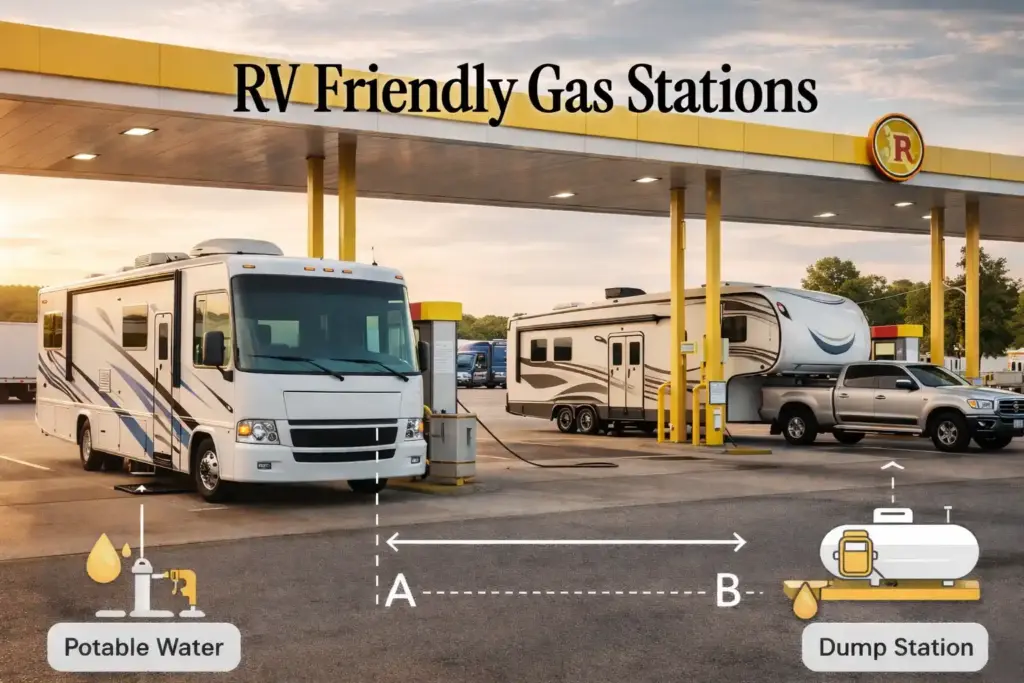
This guide shares everything I have learned about how to find rv friendly gas stations that offer the space we need. We will cover the best apps, the top national chains, and the physical signs of a safe station. My goal is to help you avoid the mistakes I made early in my journey. Fueling should be a quick break, not the most stressful part of your day.
What Makes a Station Truly Accessible?
In my experience, a great station is defined by its physical layout. I always look for specific structural elements before I commit to a turn. A friendly station must provide enough room for a high profile vehicle to navigate safely. For more RV travel tips and campground considerations that help you plan stops along your route, check out this resource on RV parks under $500 a month.
High Clearances and Wide Entrances
The biggest fear for any traveler is the sound of a rooftop AC unit hitting a low canopy. I prioritize stations with clearances of at least 13 feet 6 inches, which aligns with broader FHWA design standards recommended by the Federal Highway Administration for safe vehicle travel on U.S. highways. Beyond height, the entrance matters just as much to avoid tail swing issues. I look for wide, truck sized curb cuts that allow me to take a wide turn without jumping a curb.
Pull Through RV Friendly Gas Stations
If you are towing a vehicle or a trailer, reversing in a gas station is usually not an option. This is why I always search for pull through rv friendly gas stations. These locations are designed so that the pumps are aligned in a straight path from the entrance to the exit. If I cannot find a dedicated pull through, I aim for the outermost pumps for the most swing room.
Specialized RV Fueling Lanes
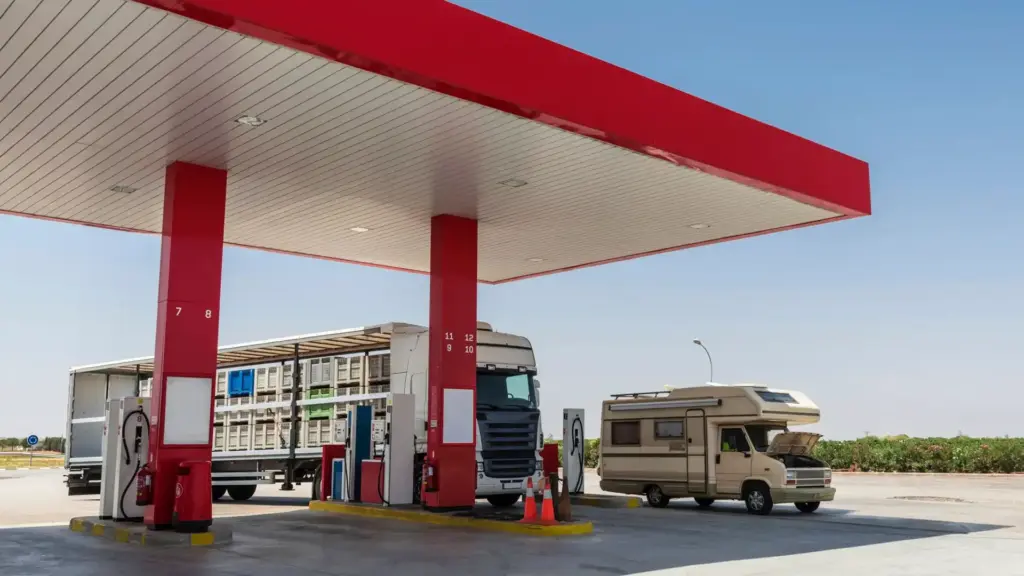
Some major chains have changed the game by installing dedicated lanes just for us. These lanes are separate from both the high speed diesel bays and the crowded car pumps. They often include long handled squeegees for our massive windshields. These specialized spots allow you to fuel up both the rig and a generator without moving.
Best Gas Stations for Large RVs: My Top Picks
Over thousands of miles, I have developed a list of reliable chains that I trust. These are the places where I know I can find the room I need. Consistency is key when you are driving in unfamiliar territory.I have found that national brands offer a level of predictability that local stations often lack, and reviewing a comprehensive List of gas station chains in North America can help you identify reliable brands before planning your route.
Pilot Flying J RV Lanes
When I am planning a long haul, I look for pilot flying j rv lanes. They are a true one stop shop for campers because they understand our unique needs. Most of these locations offer dedicated islands with both gas and diesel pumps. I also appreciate that they often co locate their dump stations and potable water fills right in these lanes.
Are Loves Gas Stations RV Friendly?
A common question in the community is: are loves gas stations rv friendly? From my time on the road, the answer is a resounding yes. While they may not always have a separate island for campers, their travel stops are built with massive footprints. They prioritize wide turn lanes and high clearances, making them one of the best gas stations for large rvs.
Regional Favorites: Buc-ee’s, Maverik, and TA
If you are traveling through the South, Buc-ee’s is famous for having dozens of pumps and incredible space. Just be warned that they can get very busy on weekends. In the West, I always look for Maverik for a reliable stop. TravelCenters of America (TA) is another heavy hitter that offers massive lots and professional grade facilities for big rigs.
The Best Way to Find RV Friendly Gas Stations Using Technology
I never wing it anymore because a little research goes a long way. I use a specific set of digital tools to scout my route and ensure my next stop is safe. These apps remove the guesswork and help prevent stressful situations. Technology has made the life of a modern nomad much safer and more efficient.
Using an RV Gas Station App
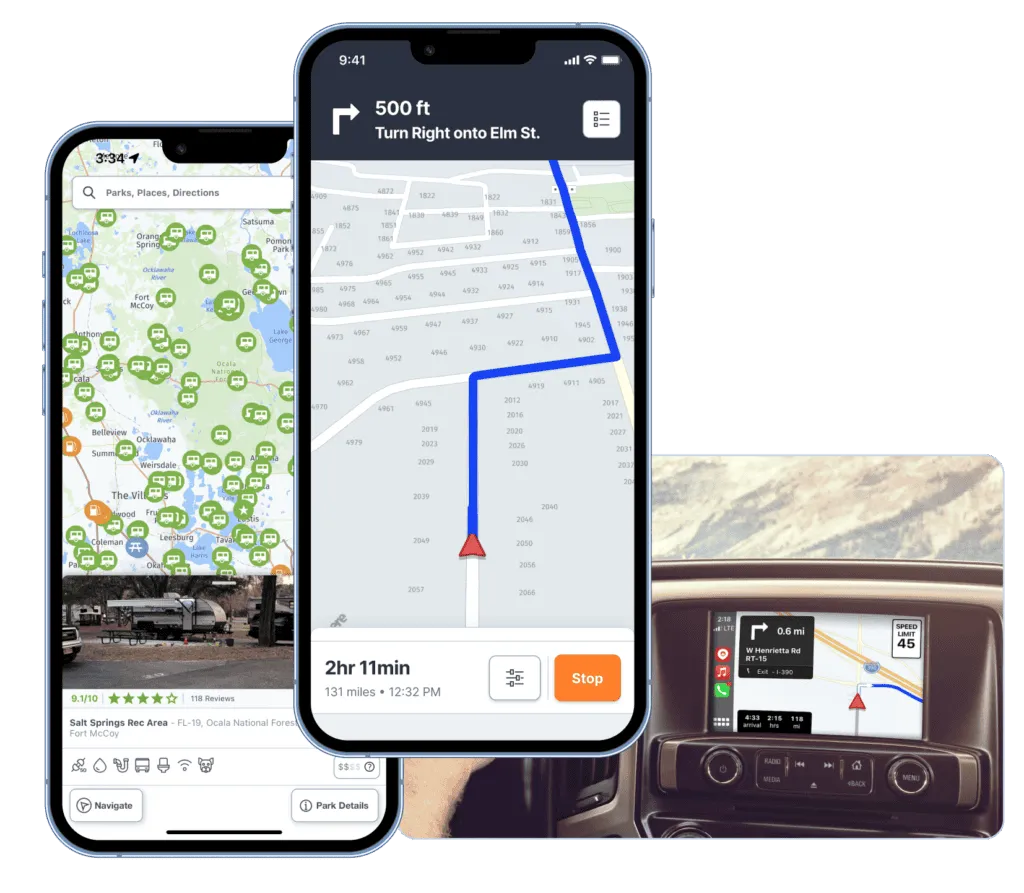
There are several mobile tools that I consider essential for my travels. If you are looking for an rv friendly gas stations app, the RV LIFE app is a top choice. It allows you to enter your rig’s dimensions and suggests stops that actually fit your vehicle. Another great RV gas station app is Trucker Path, which shows real time parking and reviews from professional drivers.
How to Find RV Friendly Gas Stations on GasBuddy
Many people use this app for prices, but there is a specific way to use it for accessibility. When I am learning how to find rv friendly gas stations on gasbuddy, I use filters for truck stops or stations with diesel. I also read the user comments carefully for any warnings about tight corners. Fellow travelers will usually post a warning if a station is too tight for a big rig.
Is there an app that shows RV friendly gas stations?
Yes, and many of them are free for public use. Besides the ones mentioned, AllStays is one of several RV-specific apps that let you filter for amenities like propane or dump stations. I also rely on dedicated RV navigation tools that factor in vehicle height and length to avoid restricted roads. I often cross reference these apps with Google Maps Satellite View to visually confirm that the entrance and exit are wide enough for my setup.
Essential Amenities for the Road
A truly friendly station offers more than just fuel to the traveler. When I am scouting a location, I look for extra perks that make the lifestyle easier. These features can save you a separate trip to a campground or repair shop. I like to maximize my time by handling all my maintenance at one stop.
Dump Stations and Potable Water
Emptying your black and gray tanks is a necessary chore that needs to be done regularly. If you are traveling full time, learning how to plan stops efficiently around fuel, dumping, and overnight stays is critical, and this guide on full time RV living tips covers exactly that. I love finding truck stops with RV lanes that also host clean dump stations. It is much more convenient to pay a small fee at a travel center while fueling, which keeps me from having to hunt for a campground just to dump my tanks.
Bulk Propane and Air
Keeping your tires at the right pressure is critical for safety on the highway. I look for stations that offer high pressure air hoses capable of reaching 100+ PSI. I also look for accessible bulk propane fill stations during the colder months. Learning how to find RV-friendly gas stations on the road that provide these specific services saves me hours of searching.
Regional Advice: Finding Stops Across North America
The strategy for finding fuel can change depending on where the road takes you. Some areas are much older and tighter than others. Being aware of these regional differences helps you plan a better route. I have learned to adjust my expectations based on the local geography and infrastructure.
RV Friendly Gas Stations on I-95
The East Coast is notorious for tight spaces and heavy traffic. When looking for rv friendly gas stations on i-95, I stick almost exclusively to the major travel plazas. These locations are designed to handle the massive flow of interstate traffic. They are much safer than trying to navigate a small town station just off a narrow exit.
RV Friendly Gas Stations in Texas and California
In the West and South, you have more options but different challenges. Finding rv friendly gas stations in texas is usually easy because everything is built bigger there. However, when searching for rv friendly gas stations in california, you have to be more careful. Fuel prices are higher, and coastal stations can be very cramped for long trailers.
RV Friendly Gas Stations Canada
For those crossing the northern border, rv friendly gas stations canada can be found along the Trans Canada Highway. Brands like Petro Canada and Irving often have large facilities that accommodate big rigs. Just keep in mind that distances between large stations can be much greater than in the US. I always suggest fueling up early when you see a suitable station.
Expert Tips for a Safe Fueling Experience
After years of driving, I have a few golden rules that I live by. These tips have saved me from countless headaches and potential accidents. Practice these habits to ensure every fuel stop is a success. My personal checklist has evolved through trial and error over many miles.
The Quarter-Tank Rule
I never let my fuel drop below a quarter tank while traveling. This gives me the freedom to skip a station if it looks too busy or too tight. When you are low on fuel, you are more likely to take risks that could lead to damage. I always start looking for camper friendly gas stations while I still have plenty of range left.
Have an Exit Strategy
Before I pull into any lot, I identify my exit point. If I cannot see a clear path out, I do not go in. This is especially true for those of us with trailers that cannot easily back up. I spent a long time practicing how to find RV-friendly gas stations on the road that allow me to keep moving forward at all times.
Use the Outer Pumps
If a station does not have dedicated lanes, I always head for the pumps on the very end. These usually provide the most space for your turning radius as you exit the island. I also keep an eye out for any obstacles like light poles or bollards. These hidden objects can easily catch the side of a motorhome during a turn.
🎥 The TRUTH About The Best Gas Stations For RVers
This video complements your article by showing how major chains like Love’s, Buc-ee’s, and Pilot Flying J handle large rigs in real-world conditions. It highlights the high clearances, wide turns, and dedicated RV lanes you discussed, along with amenities like dump stations and water fills. Most importantly, it demonstrates the strategy of safely entering and exiting these lots, helping readers feel more confident before pulling in.
Advanced Scouting: Beyond the Apps
Sometimes the digital tools do not tell the whole story. I have learned to use visual cues to judge a station as I approach it from the road. This secondary layer of scouting has prevented many close calls for my rig. Experience teaches you to see things that an algorithm might miss.
Analyzing the Entrance Slope
A steep entrance or exit can cause a long RV to bottom out. I look for flat or gently sloped driveways to protect my rear bumper and jacks. If the transition from the road to the lot looks too sharp, I keep driving. Dragging your frame across asphalt is a sound every RVer wants to avoid.
Observing Traffic Flow
I watch how other large vehicles are moving through the lot. If I see a delivery truck struggling to turn, I know it is a bad sign for my motorhome. A high volume of passenger cars parked near the pumps can also create a maze that is hard to navigate. I prefer stations like Sapp Bros or Road Ranger where the parking area is often clearly separated from the fuel islands.
FAQs
1. Which gas stations are RV friendly?
Major national travel centers like Love’s, Pilot Flying J, and TravelCenters of America are the most reliable. These chains are designed for large vehicles, offering high clearances and wide lanes that easily accommodate RVs, especially along major interstates.
2. How do I find RV friendly gas stations?
The best approach is to use specialized navigation apps along with satellite imagery. Start with an RV gas station app to identify well-rated stops, then use Google Maps to confirm the layout and make sure there is enough room to maneuver your rig safely.
3. How do I find RV friendly gas stations in remote areas?
In rural or remote areas, apps like Trucker Path are very helpful. If a station can accommodate semi trucks, it can usually handle an RV as well. Always check satellite images to confirm there is enough space to turn around safely.
4. Are Love’s gas stations RV friendly for gas-powered rigs?
Yes, Love’s locations work well for both gas and diesel RVs. Their stations typically have wide turns and enough space to maneuver gas-powered motorhomes through standard fuel lanes without difficulty.
5. How can I find RV safe gas stations on a budget?
Comparing prices on GasBuddy is a good start, but it’s important to double-check the station layout using satellite maps. Paying slightly more at a larger station is often safer and more cost effective than risking damage at a tight, cheaper location.
6. Is there an app that shows RV friendly gas stations in Canada?
Yes, apps like RV LIFE and AllStays cover Canada extensively. They are reliable tools for finding RV accessible fuel stops along major highways and travel routes across the provinces.
Final Thoughts on Stress Free Traveling
Fueling your rig should be a quick pause in your adventure, not the most stressful part of your day. By knowing how to find rv friendly gas stations and using the right tools, you can drive with confidence. Stick to the big brands when you can and always have a plan before you pull off. The open road is much more enjoyable when you aren’t worried about your next fuel stop.
Safe travels out there, and I hope to see you at a friendly stop soon!