
Industrial adhesives have transformed manufacturing by offering a versatile alternative to mechanical fasteners like screws, rivets, and welds. They distribute stress loads evenly, seal against environmental factors, and join dissimilar materials with ease. However, achieving a bond that withstands the test of time and operational stress requires more than just picking a strong glue. The success of an adhesive application depends heavily on process control, surface preparation, and understanding the chemical properties of the materials involved.
Creating a durable bond is a science that demands attention to detail at every stage. From the initial design phase to the final cure, overlooking even a small variable can lead to catastrophic failure. By following specific protocols and best practices, manufacturers can ensure their adhesive bonds perform reliably under the expected conditions.
The Critical Role of Surface Preparation
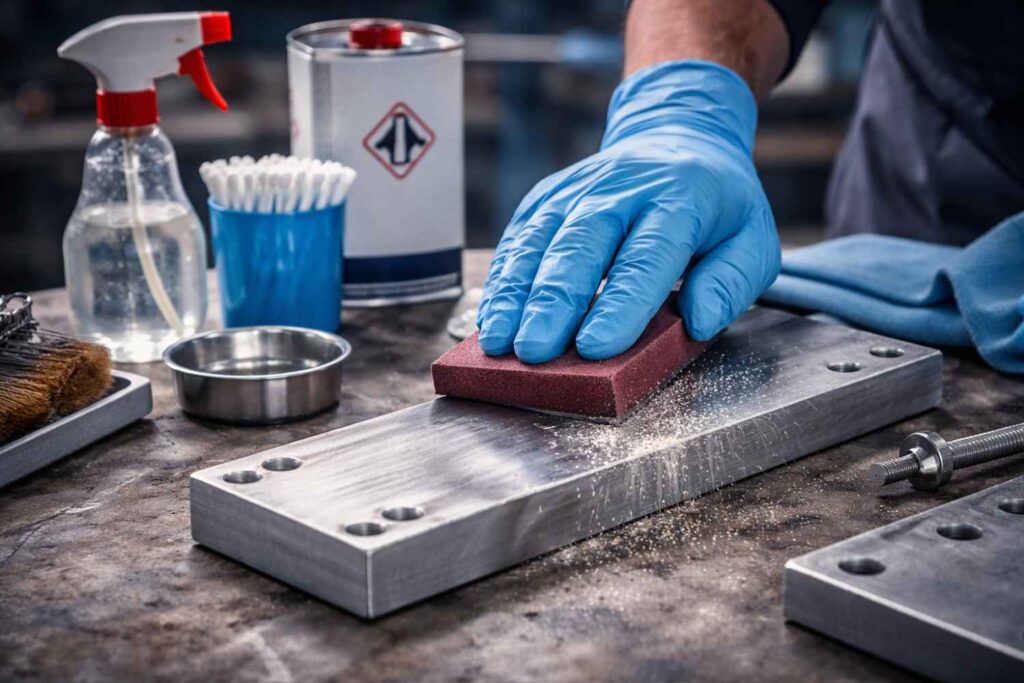
The most common cause of adhesive failure is poor surface preparation. An adhesive cannot bond to a substrate if it never actually touches it. Contaminants such as oil, grease, dust, moisture, and even fingerprints act as barriers between the adhesive and the material surface. These barriers prevent the chemical interaction necessary for a strong bond.
Thorough cleaning is the first step. Industrial solvents like isopropyl alcohol or acetone are often used to remove organic contaminants. It is crucial to wipe the surface in a single direction to lift the contaminants away rather than spreading them around. For metals, removing rust or oxide layers is essential.
Beyond cleaning, increasing the surface area often improves adhesion. Mechanical abrasion methods like sanding, grit blasting, or wire brushing create a rougher texture. This texture allows the adhesive to flow into microscopic valleys, creating a mechanical interlock that supplements the chemical bond.
Matching the Adhesive to the Substrate
Not all adhesives work on all materials. The chemical compatibility between the adhesive and the substrate is paramount. Metals, plastics, composites, and glass all have different surface energies. High surface energy materials like metals and glass are generally easier to bond because the adhesive wets out or flows over the surface easily.
Low surface energy plastics, such as polyethylene or polypropylene, present a challenge. They tend to repel liquids, causing the adhesive to bead up rather than spread. Bonding these materials often requires specialized adhesives designed for low surface energy or surface treatments like plasma or corona discharge to modify the material’s chemistry.
Precision in Component Design and Fit
The geometry of the joint plays a significant role in bond strength. Adhesives work best in shear or tension, where the force is applied across the entire bond area. They are often weakest in peel or cleavage modes, where force is concentrated at a single line or point. Designing joints to maximize shear strength and minimize peel forces will significantly enhance durability.
The fit of the components is equally important. While some adhesives have gap-filling properties, many structural adhesives require a thin, consistent bond line for optimal performance. Precision in manufacturing the parts to be bonded helps maintain this consistency. For instance, when manufacturers utilize die cutting services to shape flexible substrates or gaskets, they must ensure the edges are clean and the dimensions are exact to prevent uneven gaps that could weaken the final assembly. A consistent gap ensures the adhesive cures uniformly and handles stress predictably.
Correct Application and Mixing
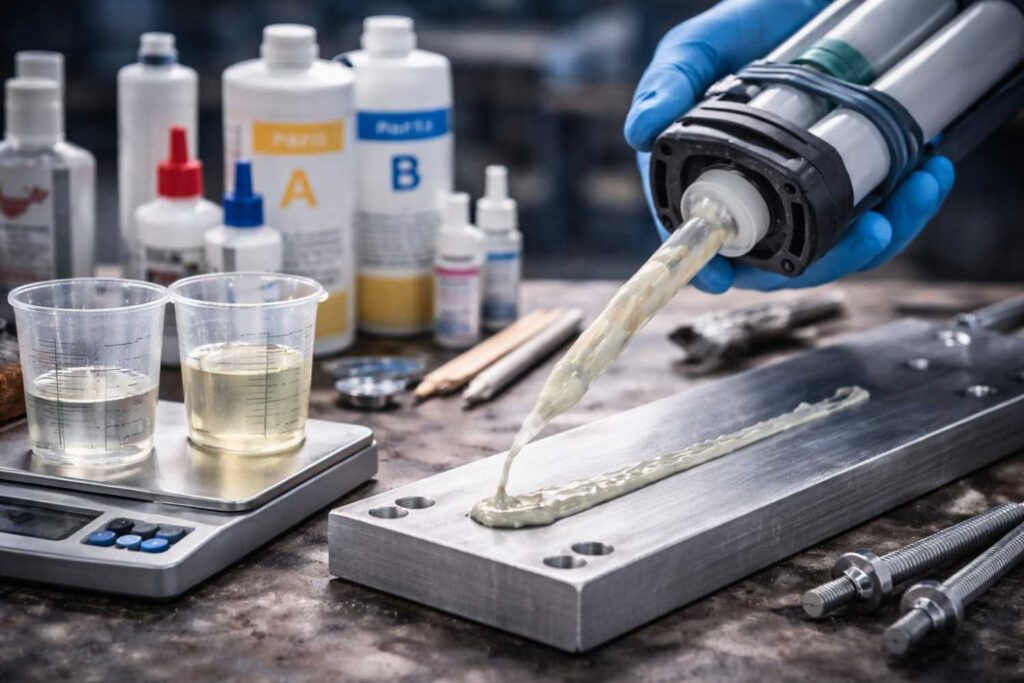
For two-part adhesives, the mixing ratio must be precise. Deviating from the manufacturer’s specified ratio can result in a bond that never fully cures or remains tacky and weak. Static mixers and automated dispensing systems are preferred in industrial settings to eliminate human error.
Pot life, or the time the adhesive remains workable after mixing, is another critical factor. Applying adhesive that has already begun to gel will result in poor wetting and a weak bond. Operators must work within the open time window to ensure the adhesive can still flow and wet the substrate surface effectively.
Controlling the Curing Environment
The environment in which the bond cures can dictate its final strength. Temperature and humidity levels must be controlled according to the technical data sheet. Some adhesives require heat to cure fully or to reach their maximum strength properties. Others cure at room temperature but may take significantly longer in colder conditions.
Clamping or fixturing the parts during the cure cycle is vital. Any movement of the parts before the adhesive has reached handling strength can disrupt the developing chemical chains. This disruption creates internal flaws within the bond line that will serve as failure points later. Uniform pressure ensures good contact, but care must be taken not to squeeze too much adhesive out of the joint, which would leave a “starved” bond line.
Conclusion
Achieving strong, reliable bonds with industrial adhesives is a systematic process. It requires a holistic approach that considers the chemistry of the materials, the physical design of the joint, and the environmental conditions of the application. By prioritizing surface preparation, selecting the appropriate adhesive, and maintaining strict process controls during application and curing, manufacturers can leverage the full potential of adhesive technology. These steps result in products that are lighter, more durable, and aesthetically superior to those assembled with traditional fastening methods.